

***
In this installment, our Executive Director Ivy Kwek shares her insights on India’s exploding start-up community following her recent attendance at a startup meeting in Chennai.
***
Last month, I attended the Global Startup Club event in Chennai, India.
The workshop gathered 30 participants from the startup community, including entrepreneurs, business consultants, legal experts, and startup talents. The workshop discussed international markets & trade, entry to new markets, product development, cash flow management, & funding opportunities.
There was no shortage of creative business ideas from the floor and the level of enthusiasm in the room was matched only by the bright yellow color of the event room walls. Participants shared the sharp challenges facing young India entrepreneurs, including stiff competition in the market & the extensive bureaucratic hurdles to securing government support.
Why did I attend? Simple, India’s startup ecosystem is the third largest in the world. In 2016 the Indian government launched “Startup India”, an initiative to promote entrepreneurship in the country. This forward-looking program has grown the numbers of registered startups from 500 in 2016 to over 150,000 in 2025!
Now the most populous country in the world, India is indeed a force to be reckoned with. And given that currently 66% of the population is under the age of 35, India offers a good labour market with a young, ready and educated workforce. With this India also aspires to be the new factory of the world, challenging China’s dominance as the No. 1 global manufacturer.
On the geopolitical front, India’s strategic location has enabled it to act as a hub between East & West. India upheld an “Act East Policy”, which demonstrated India’s ambition to deepen engagement with Southeast Asia, and by extension the Indo-Pacific region. More recently it launched a “Link West Policy”, which underscores its renewed interests in expanding ties into West Asia.
India is also playing a smart game between the great world powers. As Foreign Minister J. Jaishankar deftly articulated, India is now pursuing a “multi-alignment” approach in its foreign policy, in lieu of the traditional “non-aligned” position. India stands to benefit from ongoing US-China strategic competition, including the ongoing US-China trade tensions, which provided India opportunities to position itself as an alternative destination for companies seeking to diversify supply chains away from China, and to fill the gap left by Chinese goods suppliers in the US markets.
But doing business in India is not without hurdles. India’s political culture is entrenched with family dynasties, cronyism and increasingly polarized by religion. In some states where different political parties than the ruling BJP are in power (in the South especially), political rivalry often gets in the way of policy decisions. India’s bureaucratic system is also known to be cumbersome, while the income inequality continues to threaten social cohesion.
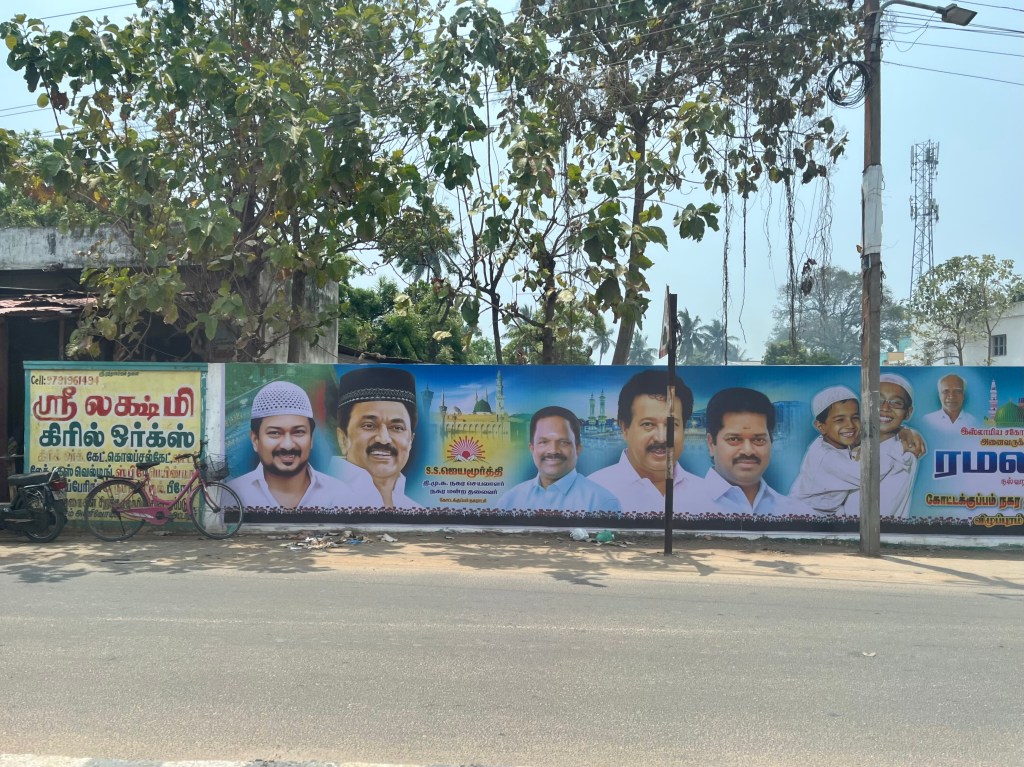
India is undoubtedly a country full of contradictions. In today’s chaotic multipolar world, middle powers like India will play an increasingly pivotal role. In order to succeed in the long run India needs to overcome its own idiosyncrasies, and leverage on its geographical and demographic advantages. But if the exuberant energy that I’ve felt from the young and enterprising lot across the room that day is anything to go by, the prospects are looking pretty good for India. The world should pay attention to the South Asian nation and capitalize on its potential.
 Aurora Insights
Leave a comment